It is also extremely disappointing how they commit and continue to commit corruption.
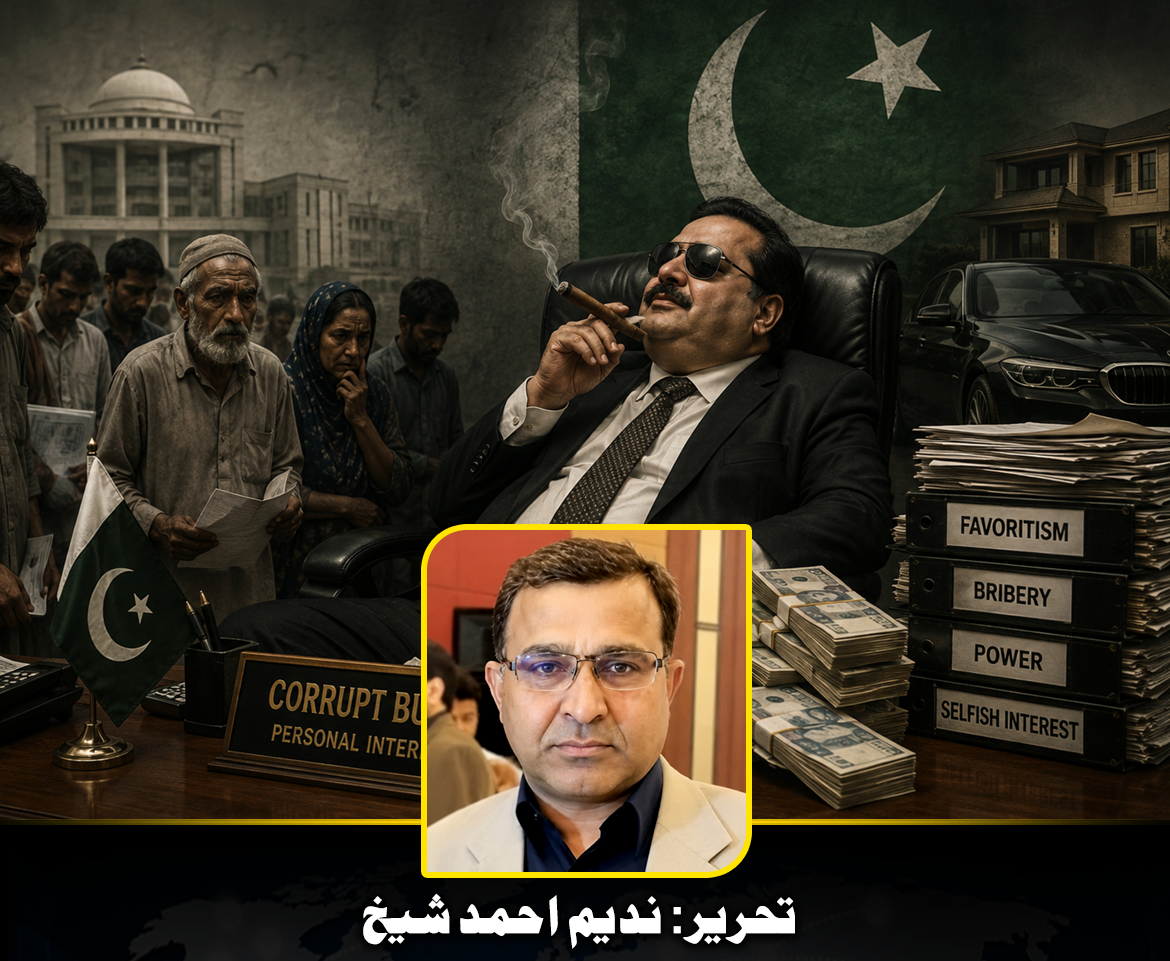
Bureaucracy in Pakistan commits corruption in four ways: from development projects, from non-development projects, from development budget, from award distribution of funds allocated for development, from organizational structure, from land, mines and mineral resources, and from management of resource distribution.
The top 100 most corrupt civil servants of Pakistan, whose performance was extremely disappointing, used to commit corruption and were the uncrowned kings of corruption, and even today their disciples, Beaver Creek, are following in their footsteps.
Perhaps no one knows what the bureaucracy has done to Pakistan and Pakistanis, even the civil services do not fully realize it.
Perhaps no other authoritative institution is even interested in the fact that Beaver Creek is corrupt, so what harm is being done to society?
It is also an undeniable fact that corruption-ridden files in Pakistan speak for themselves as to what the interest of the file is and what the interest of the person signing the file is. Surprisingly, in every file, or perhaps in any file, public interest or the full interest of the law is not seen. The Beaver Crate will accept a file in which only personal interest is seen and all that is left is to manage the file and pursue personal interests.
The way bureaucrats manage files or play tricks with them, the way they insert documents into the documents attached to them, then remove them, they change the file, they make the file food, they get the file stolen, there are four, four, five, five files.
Someone else gets the file approved and someone else gets the work done.
There is a famous saying among old bureaucrats that the new bureaucrats coming to Pakistan are full of honesty. They need to learn from the old bureaucrats and do their PhDs on files.
The bureaucracy is so self-interested and self-serving that even where a digital system is established, manual filing continues alongside digital filing.
Another psychology of Pakistani bureaucracy is to normalize white-collar crimes. Bureaucracy has the ability to break its own systems for its own interests. Every bureaucrat has a table on his desk.
Basically, the file runs in the routine, but the financial file or administrative file is their special target.
Bureaucrats consider privileges and special rights, benefits, privileges, and the use of resources as their legitimate and legal right.
They loot and use the large non-development budget for managing problems, considering it their rightful share. In addition, they also use the offices' heads, which have electricity and other facilities, for their own personal gain.
The Pakistani bureaucrat who sits in the office from morning till evening, is looking at every file that comes under his control from the perspective of his own interests.
And then when he leaves office and goes out into society, he considers social and cultural superiority as his right, while he receives his salary from the public's taxes and remains a servant of the public and is called so.
Despite being a servant, society has given him the temptation of a ruler. He is invited to meals, meets people and uses this entire social relationship for his own benefit. The bureaucrat's entire day's activities revolve around his own interests and interests rather than official affairs. It is not that he sees his benefit in one or two files, but rather he sees his right in everything.
The Eurocrat is not only corrupting state institutions for personal gain, but also corrupting society. The bureaucracy manages problems and resources based on personal gain. The bureaucracy has destroyed the state, corrupted the state, and has not only put other institutions behind it, but has also harmed society.
In Pakistan, work cannot be done without money. When files are stuck, people in society have also learned the same thing: give money and get approval for even the wrong work.
Over the past 79 years, corruption has not only corrupted the state and state institutions, but also society.
For example, no secretary, deputy secretary, section officer, commissioner, deputy commissioner or assistant commissioner in the office of the kings of corruption in the province of Sindh can work without money. This is my personal experience as a Pakistani citizen, journalist, human rights activist. So, will the entire district, the entire province and the entire country not run on corruption or will it be? Will society not become corrupt?
Basically, Pakistani state institutions have destroyed society, which we always discuss in the Valu system. The bureaucracy has played the main role in this because it has most of the powers. Then the military judiciary, elected public representatives, and the main players in corruption are the level-headed ones.
The bureaucracy has put on a mask over itself, doing all the work itself, pushing others behind and putting them ahead, just as it shifts the blame to other institutions like the military judiciary and the technocracy.
The Pakistani people have been told that the real root of social corruption is bureaucracy, yet the tragedy of our nation is that when bureaucracy or such people enter the society, the society welcomes them warmly, considers them its messiah and makes people take pictures with them, invite them to meals, and invite them to weddings.
They are respected, instead of people holding society accountable, people respect them, welcome them warmly, and shower them with flowers.
A bureaucrat is an employee of the government and is an important part of society. When he is receiving respect and honor from a society as a bureaucrat, why would he leave a higher-paying job when he is receiving the same respect and honor from it?
If the people stand up to their corruption schemes, there will be no corruption at all.
And then they too will have to think about how they continue such behavior.
It is a fact that we have all hollowed out our state and society. Pakistani universities desperately need to conduct research on bureaucracy and bureaucrats.