
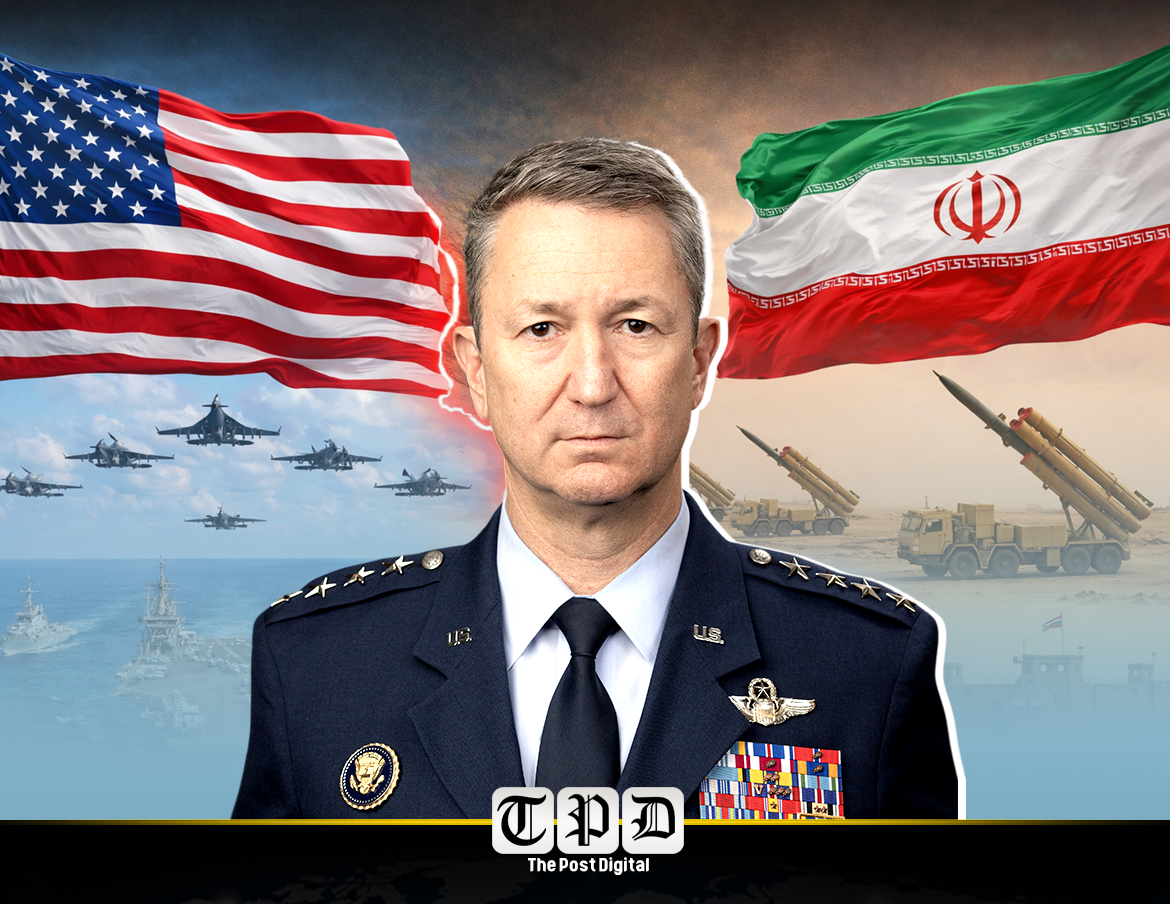
Washington: Chairman of the U.S. Joint Chiefs of Staff General Dan Caine has warned that while the United States is capable of launching another large-scale military campaign against Iran, doing so would dangerously reduce the country's stockpile of interceptor missiles.
The warning comes after reports emerged that President Donald Trump had ordered a temporary halt to U.S. strikes on Iran. According to American media, the decision was made on Friday after 13 days of military operations. It remains unclear whether the pause is temporary or marks the beginning of a ceasefire.
According to The New York Times, Vice President J.D. Vance and General Dan Caine voiced concerns during a White House meeting about intensifying the conflict with Iran. In a private briefing, General Caine reportedly cautioned that renewed large-scale operations could significantly weaken the U.S. Central Command's missile defense capabilities by exhausting interceptor missile reserves.
A senior U.S. official, speaking on condition of anonymity, said the military campaign had produced results contrary to expectations, arguing that the strikes had strengthened internal unity within Iran and allowed its leadership to focus on external threats.
U.S. media also reported that the suspension of strikes was linked to diplomatic efforts by Omani officials, who traveled to Iran on Friday in an attempt to facilitate negotiations.
Speaking to reporters, President Trump said he still had the option to resume and intensify military action against Iran, adding that such operations could "destroy everything." However, he emphasized that the smarter strategy is to reach a deal with Iran rather than prolong the conflict.
Meanwhile, Iran has also announced a temporary suspension of retaliatory attacks against the United States. The Islamic Revolutionary Guard Corps (IRGC) claimed that weaknesses in the U.S. air defense system had enabled Iranian drones and missiles to strike American military targets without significant resistance.
Iranian sources told British media that Tehran would maintain the pause only as long as the United States refrains from further attacks. However, they stressed that Iran remains skeptical of Washington's intentions and continues to adhere to its policy of responding to any attack with retaliation.
According to the same sources, the current pause should not be interpreted as a lasting peace but rather as a temporary, strategic move while diplomatic efforts continue.