
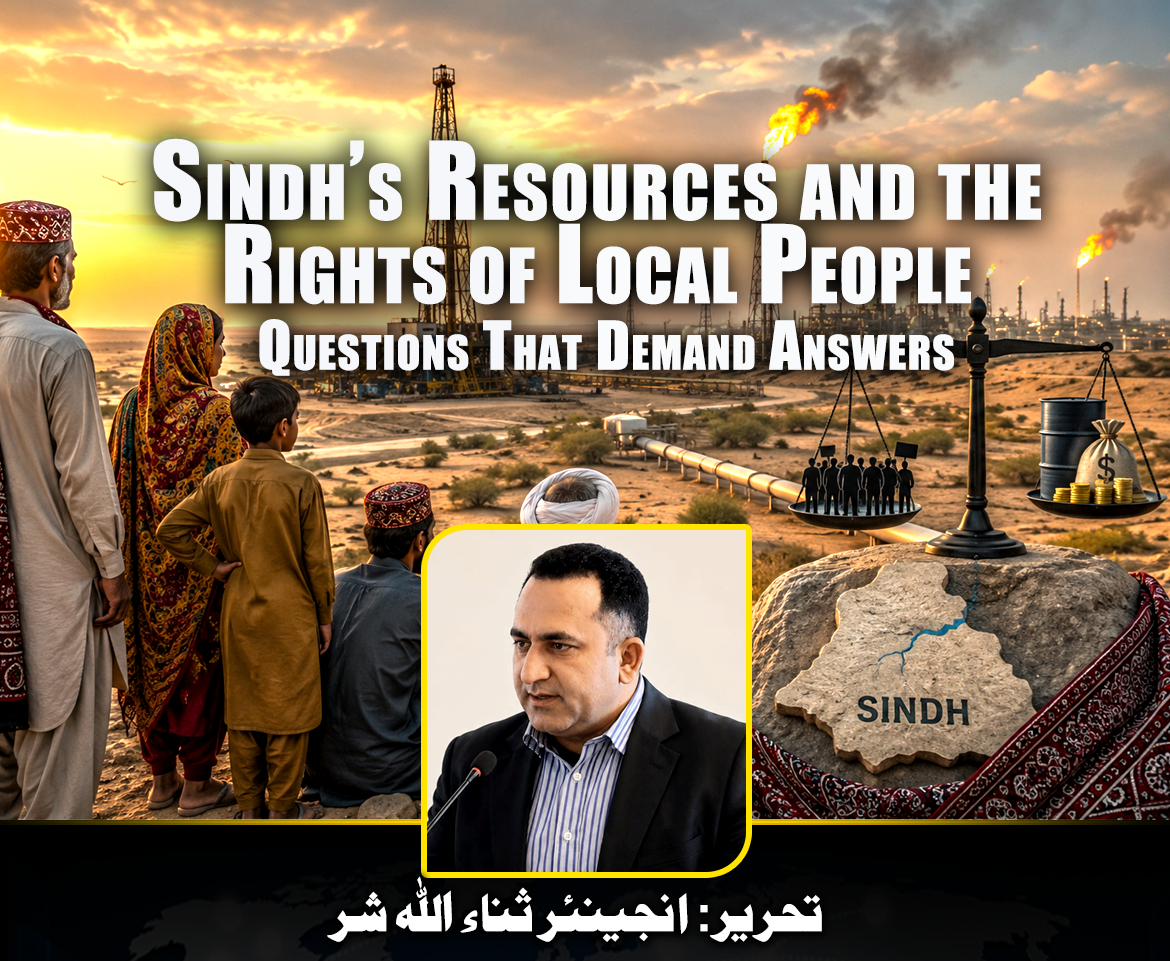
infrastructure, and poverty present serious challenges, major development agreements—including oil and gas projects—clearly stipulate that companies must provide at least 80 percent of jobs to local citizens.
The purpose of this policy is not only to create employment but also to ensure that the first benefit of natural resources goes to the people of the areas from which those resources are extracted. In many countries, this principle is strictly enforced.
In contrast, no such effective policy appears to exist in Sindh’s oil and gas fields. Even if such a condition exists on paper, there is no visible implementation in practice. The local residents of resource-rich districts such as Ghotki, Khairpur, Badin, Sanghar, Dadu, Mehar, and other areas of Sindh still remain deprived of employment and development opportunities that should be their fundamental right.
Another important aspect is the royalty generated from natural resources and its fair distribution. There is a public perception that an appropriate share of the benefits and royalties generated from Sindh’s resources is not reaching the local population, and that transparency and effective monitoring are also required in this regard.
Unfortunately, certain elements remain silent on matters related to Sindh’s resources and royalties in exchange for minor benefits and privileges, resulting in nothing but deprivation and disappointment for the common people of Sindh.
It is the need of the hour that all oil and gas agreements make it mandatory to include employment for local people, a fair share in resources, and transparent distribution of royalties, so that the people of resource-rich areas can truly benefit from the wealth of their land.
Note: This article is based on the author’s personal opinion, and the institution does not necessarily agree with it.